
Inside Backun




When Morrie Backun visited Australia during his 2026 tour, our team members had the pleasure of travelling with him to five states. He was always generous with his time—ready for a long and detailed conversation—and carried an ease and sharp wit about him as he made his way around every city.
In Australia, many clarinettists have heard of Backun but know little of the story behind the name. Morrie Backun is the Founder and President, but Backun is a family business. Morrie’s wife, Mary Backun (recently retired Principle Clarinet of Vancouver Opera Orchestra) is responsible for, among other things, quality control of professional clarinets, personally testing each Custom Clarinet and keeping notes on every serial number. Morrie's son Jeremy is an expert engineer in his own right, improving instruments and managing the Laskey brass division with Morrie's nephew, Joel Jaffe (Vice President of Sales and Marketing). For those of us who were around last decade, Joel came out on tour with Backun to Australia, so he was a familiar face on this last trip. Their family values and commitment to quality craftsmanship are evident in how Backun cares for their artists and their instruments.
Morrie is, safe to say, a clarinet engineering genius; watching him work with clarinets was an absolute privilege, and perhaps one of the most incredible things I have ever seen. He would sit down with the player, listen to them play and make small adjustments, one tone hole at a time, that completely transformed the sound, a skill few people in the world have. All of this was done with the mechanical precision and smoothness only made possible with years of experience and expert instinct.
Morrie is incredibly generous with the knowledge he shares, not just on the production and design of the clarinet, but also on music and being a performing and professional player at the highest level. Here are a few of the many wonderful insights, stories, and tips he shared:
The Complete Guide to Clarinet Maintanence
The steps involved in looking after a wooden clarinet properly are considerably more detailed than one may initially think. In each state visit, Morrie chose a demonstrator to illustrate some of these maintenance points, including professional clarinettists, some of whose habits he humorously tore apart (without pulling any punches!). Read our clarinet maintenance guide here, which includes several of Morrie’s recommendations.
The Essence Clarinet
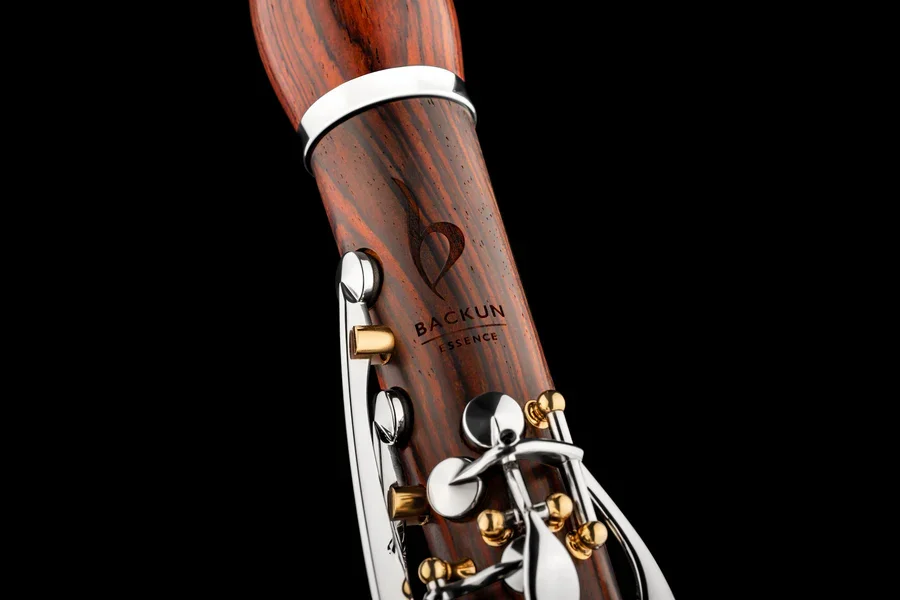
The new Essence Clarinet was a stand-out on this trip. My impression was that, to Morrie, the Essence was a culmination of the best of Backun, created using the most cutting-edge technology, enabling him to create a higher standard clarinet with incredible precision, consistency and efficiency. This translates to a much higher quality instrument at a more affordable price point. The sound profile of this instrument is more traditionally French, with the metal resonators acting to capture the brightness and ring associated with orchestral playing. The Essence Barrel is best described as a combination of the Lumière and Fatboy Barrels: refined but with projection and punch. The Lumière will still be the flagship Backun model; however the Essence showcases the finesse, ease and performance of Backun at a lower entry point, with a more traditional sound profile.
Rubber Tone Holes
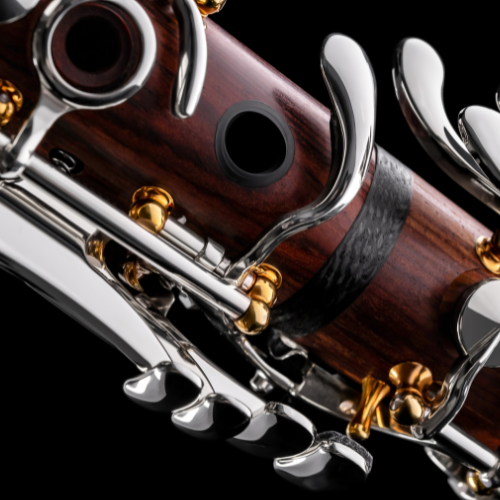
One of the developments Morrie is most proud of is the addition of a rubber lining to the tone holes. Why? Three reasons:
Every clarinettist will attest to the change that occurs to the tuning and sound of the clarinet as you 'warm it up' while playing, and for some clarinettists, this can be quite drastic. Through a series of experiments, Morrie found that a great deal of this can be attributed to the wood in the tone holes moving as the environment/temperature changes, not the clarinet body itself. Adding the rubber removes this movement, keeping the tuning and sound stable.
To carry on from the previous point - tone holes move. When you test a clarinet with an air-leakage machine, you can adjust the pads to about 95-99% sealed, but they will begin to leak again within a short space of time. With a tone hole in a fixed position, the pad can cover the tone hole totally and will require less adjustment.
Upon the unfortunate occasion that a clarinet cracks through a tone hole, air-leakage becomes quite a problem for the player. Previously, replacing or mending tone holes could be a hassle for technicians. Now, the tone hole will not be impacted at all!
This feature will appear on all Essence and Lumière clarinets moving forward, now that the technology required to do this consistently at scale has been achieved.
Ongoing Improvement
Improvements are constantly occuring. We have noticed that whenever an improvement is developed, it is immediately added to any instruments where applicable. For example, we have noticed on Alpha Bass Clarinets that a small adjustment screw has now been added to the register key. As another example, the new Alpha A Clarinet will have a standard sized bore and tenons, and so, moving forward, the Alpha Bb Clarinet will too. The improvements are often small, but it is incredible to know that the standard of clarinets will continually rise, without having to wait for a completely updated model or next generation.
The F Vent Key
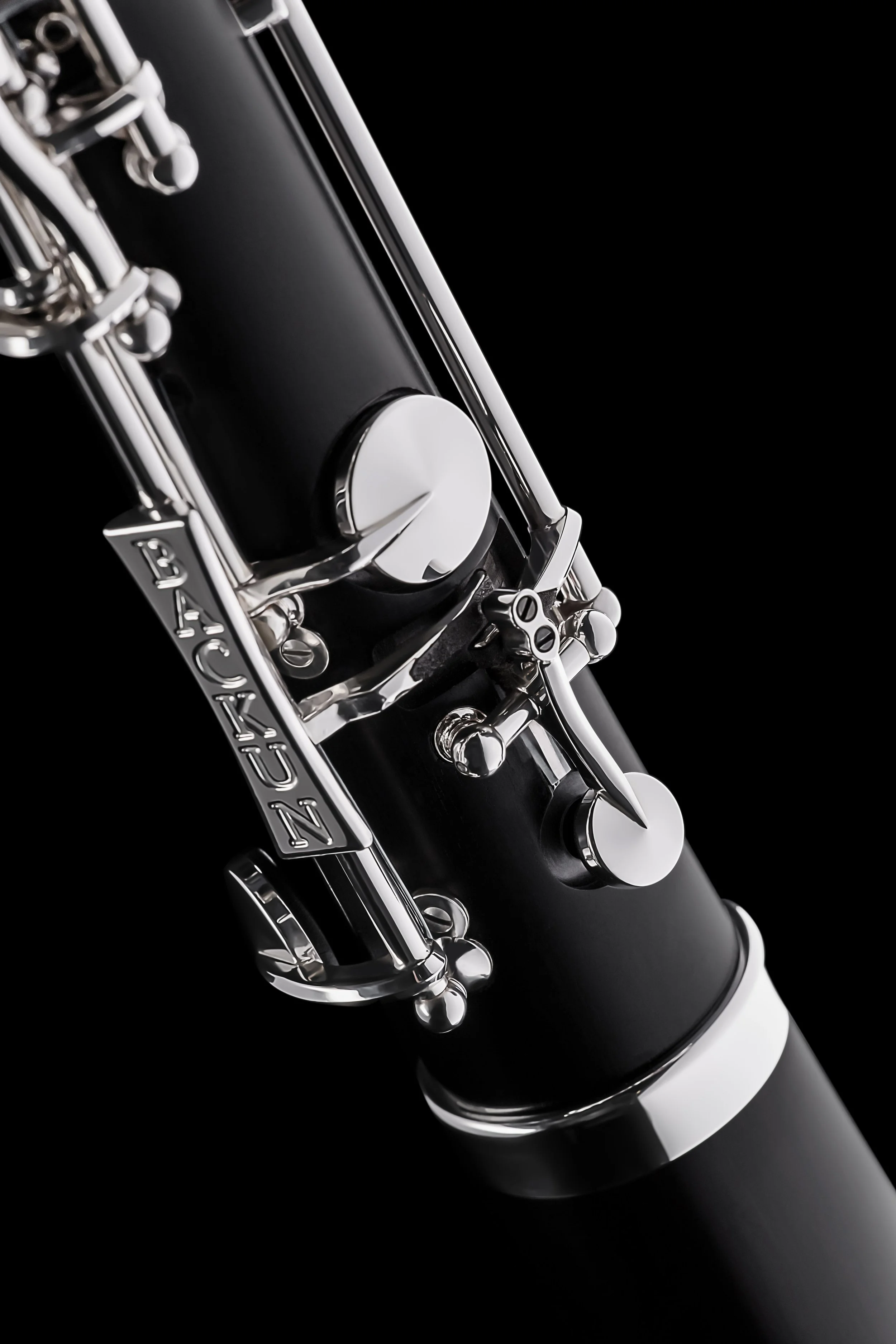
The genius of the automatic F vent key: Morrie tells a story (which you should hear in-person for full effect), about an experienced professional player auditioning for a highly respected American orchestra. When this respected player did not make it through the first round (Mozart Concerto in A Major), he asked a colleague he knew on the panel for feedback, to which the colleague replied: out of tune, and noisy keys. Around the third line down, the semiquaver descending G7 chord landing on a G, then moving to F natural is the reason he, and most other clarinettists without some version of a correction key, were disqualified. Morrie tells this story not to make you self conscious of your low-F tuning, but to hammer home that being in tune is the bare minimum in an orchestra. This is a particularly exposed excerpt to demonstrate the automatic F Vent, which brings the note up in pitch with no need to retrain your fingering.
Undercut/Overcut Tone Holes
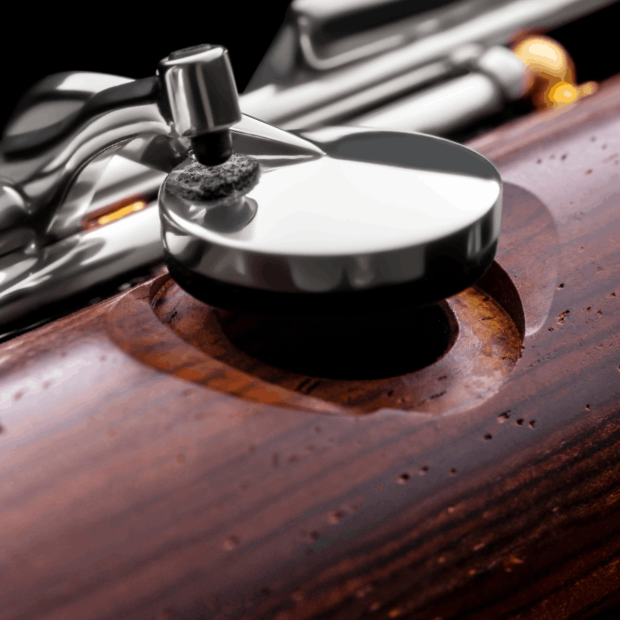
Undercut and overcut tones holes are a major contributor to sound quality and tuning. Few very excellent technicians, including our very own Edison Castilho Junior, are able to use this skill to customise an instrument to the player by removing material from or adding some to each tone hole and thus shaping each note’s timbre and tuning. Morrie is an absolute master at this. In this way, every clarinet can be improved, including synthetic clarinets and other instruments in the clarinet family. The effectiveness is particularly evident on the bass clarinet, where the Backun instruments are often considered to be less stuffy, more in tune, and more controlled than comparable instruments from other brands.
Bell Geometry
We all know that the mouthpiece and barrel have a huge impact on the sound, but so too does the Bb/A bell. The voicing or double-voicing groove on the inside of the bell significantly influences the way the sound is shaped, projected and tuned, and even more so at a distance, like in a concert hall.
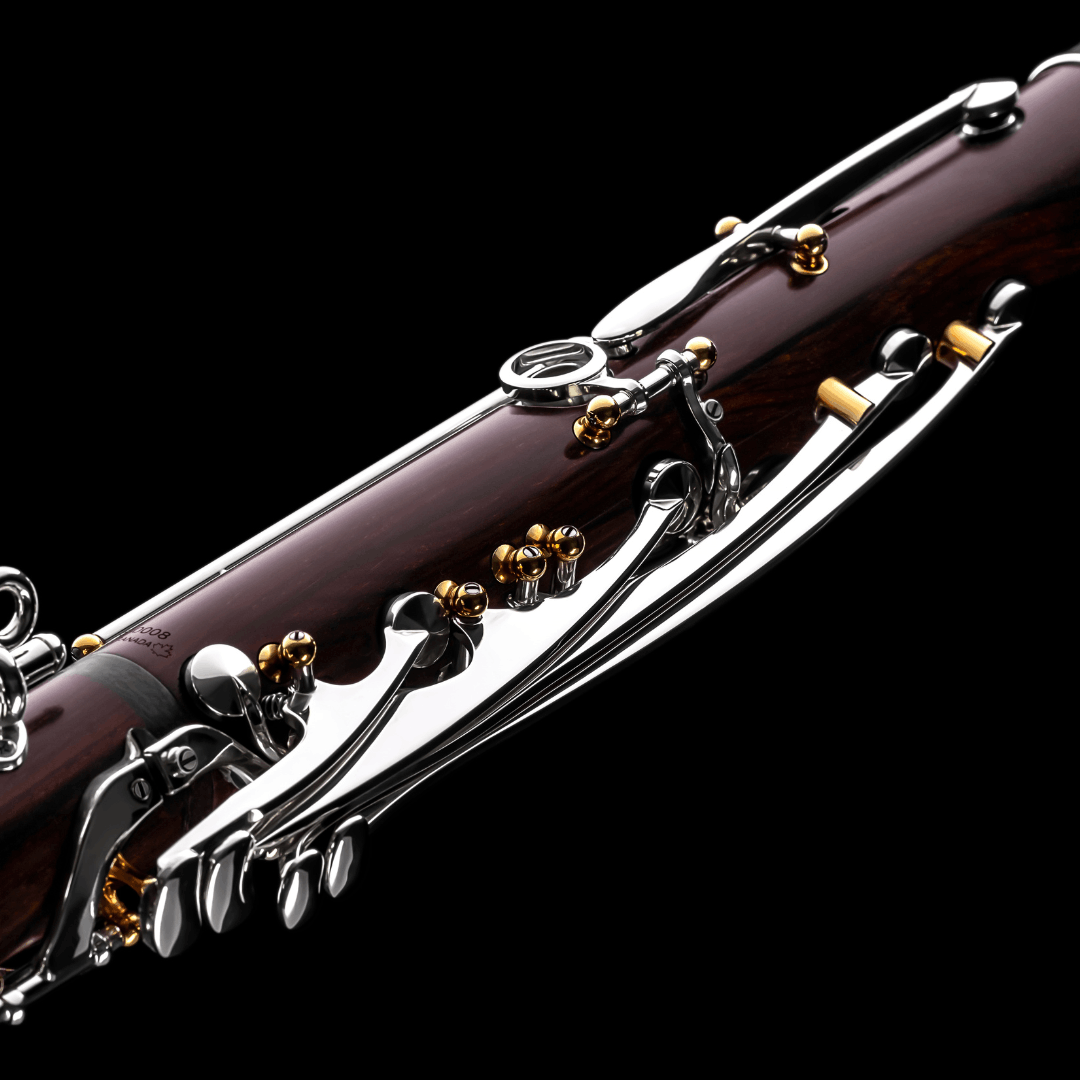
In-Line Trill Keys
In-line trill keys can reduce how often your clarinet gets waterlogged, as the natural waterline bypasses the in-line trill key tone holes. This in-line design is a feature on Backun’s professional and custom clarinets.